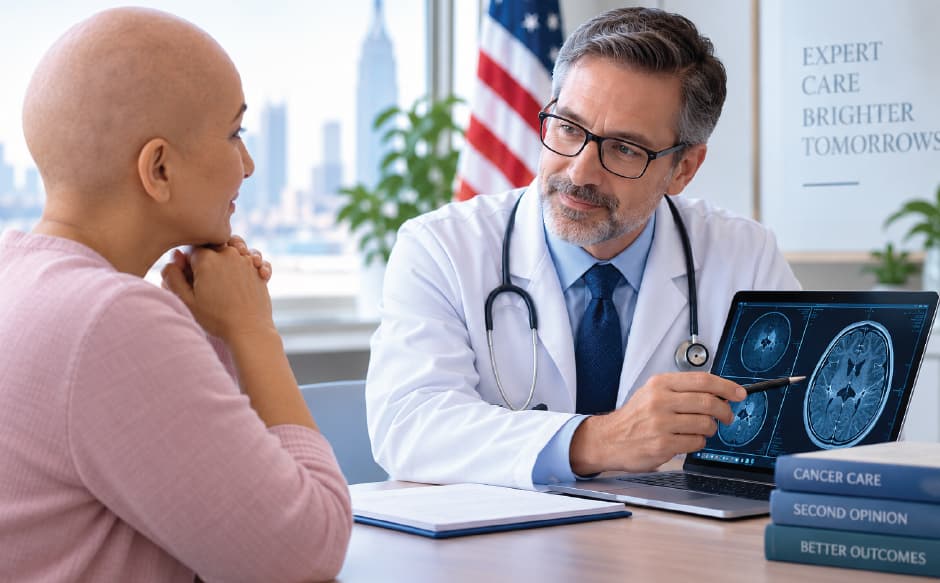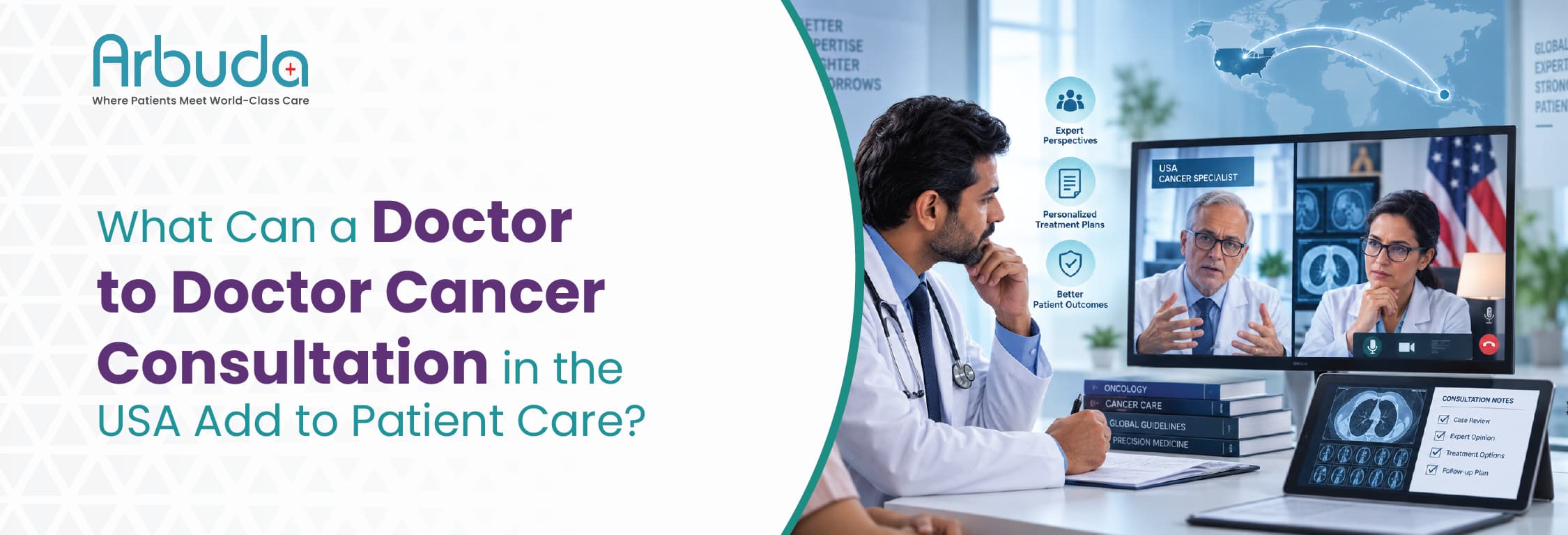

When a patient is diagnosed with cancer, the instinct is often to look for a different doctor , someone whose opinion might contradict the first. But that framing misses how oncology actually works. Treatment decisions are rarely made by one physician in isolation; they're shaped by input from multiple specialists working on the same case. A doctor to doctor cancer consultation takes that same principle and extends it beyond the walls of a single hospital.
This guide explains what a doctor to doctor cancer consultation actually is, how it differs from a conventional second opinion, and how the process works end-to-end.
What Is a Doctor to Doctor Cancer Consultation?
A doctor to doctor cancer consultation is a structured process in which a patient's treating oncologist, and often the patient directly, connects with an additional oncology specialist for expert input on a diagnosis, pathology, or treatment plan.
The defining feature is collaboration: the original physician stays fully involved, and the goal is a shared, coordinated recommendation rather than a competing one.
This is different from how second opinions are traditionally perceived. A conventional second opinion is often sought quietly, sometimes without the first doctor's knowledge, and can be framed (even unintentionally) as a challenge to that doctor's judgment. A doctor to doctor consultation flips that dynamic:
| Traditional "Second Opinion" | Doctor to Doctor Cancer Consultation | |
|---|---|---|
| Framing | Independent check on the first doctor | Additional expertise added to the existing team |
| Local physician's role | Often bypassed or informed after the fact | Actively included throughout the process |
| Where the findings go | Primarily to the patient | Shared with both the patient and the treating physician |
| Relationship dynamic | Can feel competitive | Designed to be collaborative |
| End goal | A separate opinion to weigh | A joint, coordinated treatment decision |
Why This Model Works Better Than a Standalone Second Opinion
Cancer treatment already depends on multidisciplinary review, medical oncology, surgical oncology, radiation oncology, pathology, and radiology typically weigh in together on complex cases through tumor boards. A doctor to doctor cancer consultation is essentially this same process, made accessible to patients whose local team doesn't have every one of these specialists in-house, or whose cancer type benefits from a sub-specialist who sees a higher volume of that specific diagnosis.
This collaborative framing also tends to work better in practice:
- Local physicians are more receptive. Being included in the process, rather than bypassed, reduces the friction that can come from a patient quietly seeking outside input.
- Patients get a coordinated plan, not two competing ones. Recommendations are shared with the treating physician so both can align on next steps.
- It fits how oncology already operates. Multidisciplinary input is standard practice, not an exception, a doctor to doctor consultation simply extends that practice across institutions and borders.
What a Doctor to Doctor Cancer Consultation Typically Covers
- Pathology re-review: confirming or refining the specific tumor type, grade, and staging.
- Imaging review: a specialist look at the original scans, not just the radiology report.
- Treatment plan evaluation: assessing whether the proposed surgery, chemotherapy, or radiation approach aligns with current evidence for that specific cancer type.
- Genomic and biomarker considerations: relevant for cancers where precision oncology has expanded treatment options.
- Clinical trial visibility: flagging trials the local team may not otherwise have visibility into.


What This Service Is Not
- It is not a replacement for ongoing, in-person cancer treatment, surgery, chemotherapy, and radiation still take place wherever the patient is being treated.
- It does not guarantee a different diagnosis or outcome; sometimes the most valuable result is confirmation that the current plan is well-suited to the case.
- It is not designed to bypass the treating physician, the model only works as intended when the local doctor stays involved.
- It is not a substitute for urgent, in-person medical care.
How Arbuda's Doctor to Doctor Cancer Consultation Works
Arbuda offers Doctor to Doctor Cancer Consultation as a structured patient navigation service, connecting a patient's treating physician with additional US oncology specialists for collaborative case review. Arbuda itself is a technology-enabled navigation platform, not a hospital or treatment provider; the clinical judgment throughout belongs entirely to the physicians involved.
The process typically follows these steps:
1. Case intake- Pathology reports, imaging (the actual scans and slides, not just written summaries), lab results, and the current treatment plan are collected and organized. Specialist matching. The case is routed to a US oncology specialist whose sub-specialty matches the specific cancer type.
2. Independent review- The specialist reviews the pathology, imaging, and treatment plan directly.
3.Doctor to doctor discussion- Where possible, the reviewing specialist connects directly with the patient's treating physician to discuss findings, the step that gives this model its name. Shared summary. A written summary is provided to both the patient and the treating physician, so any recommendations can be acted on jointly rather than in isolation.
For patients in Saudi Arabia, the UAE, Qatar, Kuwait, Oman, Bahrain, Iraq, and Mauritius, this structure removes the need to travel for a single specialist consultation, the review happens remotely, with the patient's local physician still central to the process.
For patients in Saudi Arabia, the UAE, Qatar, Kuwait, Oman, Bahrain, Iraq, and Mauritius, this structure removes the need to travel for a single specialist consultation, the review happens remotely, with the patient's local physician still central to the process.
Conclusion
A doctor to doctor cancer consultation reframes what a second opinion is for: not a way to check up on a doctor, but a way to bring more oncology expertise into a decision that deserves it, with the treating physician still at the center of the process. For patients wanting this kind of collaborative, specialist-level input from US oncologists without the cost and disruption of travel, Arbuda's Doctor to Doctor Cancer Consultation service exists to make that coordination possible, while leaving every clinical decision exactly where it belongs: with the physicians involved.
Curious what a Doctor to Doctor Cancer Consultation could look like for your case?
Chat with Arbuda's team to understand what records you'd need and how the process would work for your specific diagnosis.
Medical Disclaimer: This article is for general educational purposes only and does not constitute medical advice. It is not a substitute for professional diagnosis or treatment. Always consult a qualified oncologist or healthcare provider regarding any medical condition or before making decisions about your cancer care. Arbuda is a patient navigation platform that facilitates access to independent medical specialists and does not itself provide medical treatment or diagnosis.